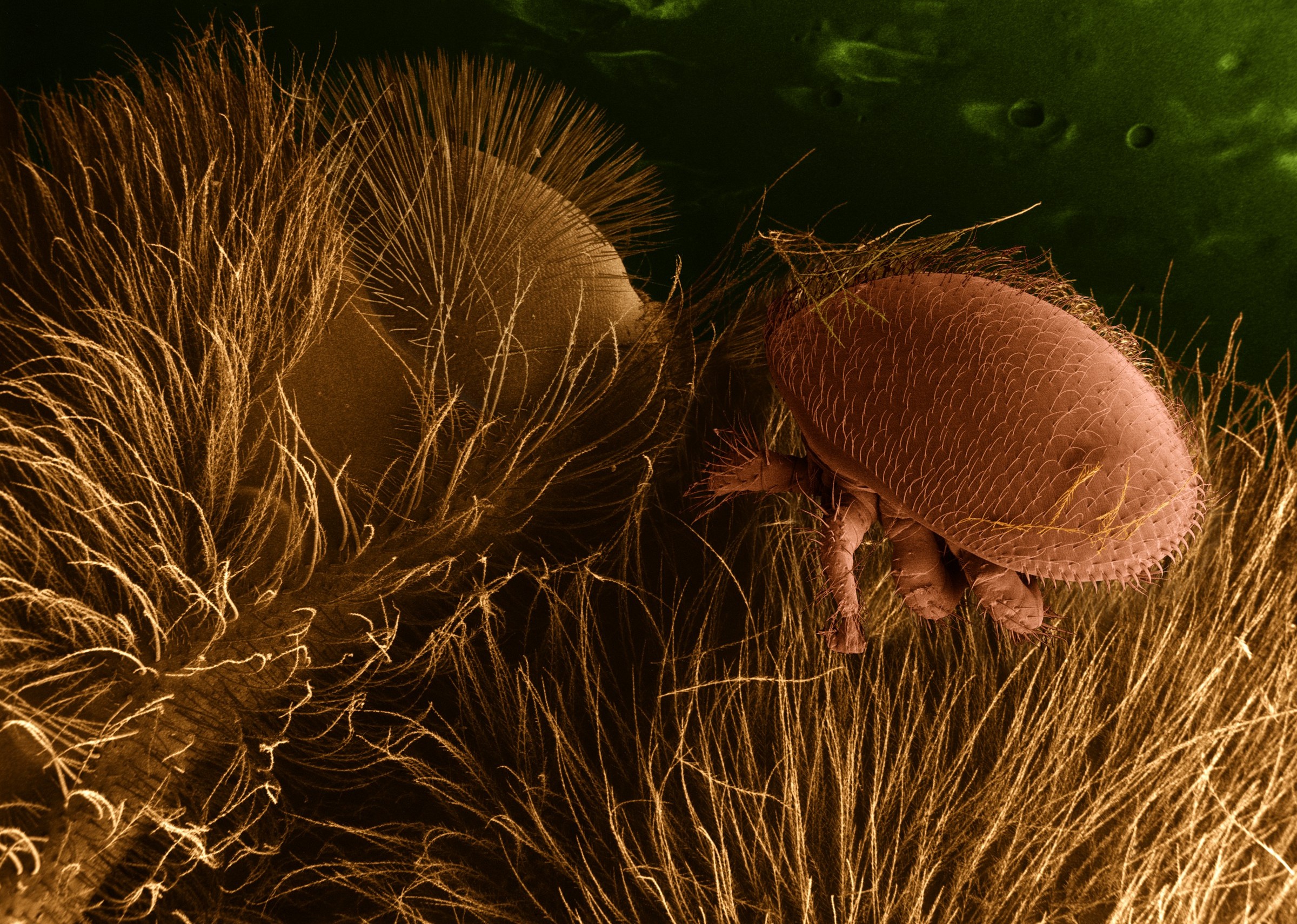
Varroa destructor arrived in Romania in the early 1980s following the global spread from its original host, Apis cerana. Since then it has become the single most significant ongoing management challenge for beekeepers across the country. The mite's biology is well understood, yet losses from untreated or poorly timed infestations remain common because the treatment calendar is frequently misread.
Why treatment timing matters more than product choice
The mite population inside a colony follows an exponential growth curve. Starting from a modest spring infestation of 1–2% phoretic mites on adult bees, an untreated colony typically crosses damaging thresholds by late summer. What determines whether a colony collapses is not which product was applied — most registered varroacides work well when used correctly — but when the treatment occurred relative to the brood cycle.
The two windows that matter most in the Romanian beekeeping calendar are:
- Late summer (August–September): after the main honey harvest is off the hive, before the queen begins producing the long-lived winter bees. Reducing mite loads at this point ensures that the bees wintering inside the cluster emerge without the immunosuppressive burden of heavy mite parasitism.
- Winter (December–January): when the colony is broodless or nearly so. In broodless conditions, all surviving mites are exposed on adult bees rather than protected inside sealed cells. Oxalic acid treatments applied during this window are unusually effective for this reason.
A colony going into October with a mite load above 3% phoretic infestation is unlikely to form a healthy winter cluster regardless of what is done afterward.
Monitoring before treating
Treatment decisions should rest on actual counts, not on calendar dates alone. Two practical methods are widely used in Romanian apiaries:
Alcohol wash
Collect approximately 300 adult bees from a brood frame — not the queen — into a jar with 90% alcohol or windshield-washer fluid. Shake for 60 seconds, then pour through a fine mesh into a tray. Count the mites that settle at the bottom. Divide by the number of bees to get a percentage. A result above 2% during the active season indicates that treatment is warranted. Above 3% in July or August represents an urgent situation.
Sticky board count
Insert a greased board under the mesh floor for 24–72 hours and count natural mite fall. This method has higher day-to-day variability than the alcohol wash but provides a non-lethal alternative and is useful for tracking trends across the season. Counts above 10 natural mite falls per day during summer are a reliable signal of a building infestation.
Treatment options available in Romania
Oxalic acid (Api-Bioxal, Oxybee)
Oxalic acid is the most effective treatment when applied correctly during a broodless period. The active molecule contacts mites directly on adult bees; it cannot penetrate sealed brood cells. For this reason, winter application — typically December–January in most Romanian regions — yields kill rates above 90% in a single treatment. Application methods include trickle drip (1–3 ml per occupied seam), sublimation (vaporization), and in some formulations, extended-release sponges that continue releasing acid over several weeks.
Approved Romanian products: Api-Bioxal (registered for both trickle and sublimation), Oxybee (sublimation). Follow product label temperatures; sublimation should not be performed below −5°C due to reduced vapour uptake by cold bees.
Formic acid
Formic acid is the only registered varroacide that penetrates sealed brood cells, making it useful during the main active season when 70–80% of mites are inside capped brood. Products available in Romania include Maqs (formic acid gel pads) and Api-Bioxal extended formulas. Efficacy against capped mites in Romanian summer conditions (temperatures between 10°C and 29°C for the pad treatment) can reach 60–80%. Application above 29°C risks queen loss; below 10°C it becomes ineffective.
Thymol (Apiguard, Apilife Var)
Thymol-based products are widely used in Romanian organic apiaries and by beekeepers who prefer natural-origin treatments. Apiguard trays are placed above the brood box at temperatures above 15°C. The thyme-derived active has secondary benefits: mild antifungal properties that help control nosema and a robbing-deterrent effect that can be practical in apiaries with multiple colonies placed close together. Full efficacy requires two treatment cycles of 4 weeks each, which fits reasonably into the post-harvest late-summer window.
Synthetic acaricides (Apivar, VarroMed, amitraz strips)
Apivar (amitraz) strips are inserted between brood frames and left for 6–8 weeks. Their long contact time gives them utility when used as a late-autumn treatment after the forager population shrinks. Resistance to amitraz has been documented in several European countries and is an emerging concern in Romania; monitoring through mite washes before and after treatment is the only way to detect declining efficacy. VarroMed (oxalic acid + formic acid combined) is registered for use during active brood-rearing periods at lower temperatures where formic acid alone would be unreliable.
Mechanical methods used alongside chemical treatments
Several practices reduce mite reproduction rates without chemical inputs and are used as complements — not substitutes — for registered varroacides:
- Drone brood removal: Mites preferentially enter drone cells. Inserting a drone-foundation frame, allowing it to be capped, then removing and freezing it before emergence removes a disproportionate share of the reproducing mite population.
- Brood break via queen caging: Confining the queen for 21–24 days creates a broodless period during which an oxalic acid treatment can be highly effective even in summer. This is more disruptive to colony development than winter treatment but useful in high-infestation situations detected during the active season.
- Comb replacement: Old dark comb accumulates pesticide residues and pathogen loads. Replacing 2–3 frames per year with fresh foundation reduces the overall disease burden and is standard practice in well-managed Romanian apiaries.
Resistance and rotation
Using the same active ingredient year after year selects for resistance. The currently recommended approach in Romanian veterinary guidelines is to alternate between chemical classes: organic acids (oxalic, formic) in one treatment window, synthetic acaricides in the next. Thymol occupies its own class and can slot in without disrupting the rotation. Keeping treatment records — date, product, infestation level before and after — is essential for detecting declining efficacy before it becomes a crisis.